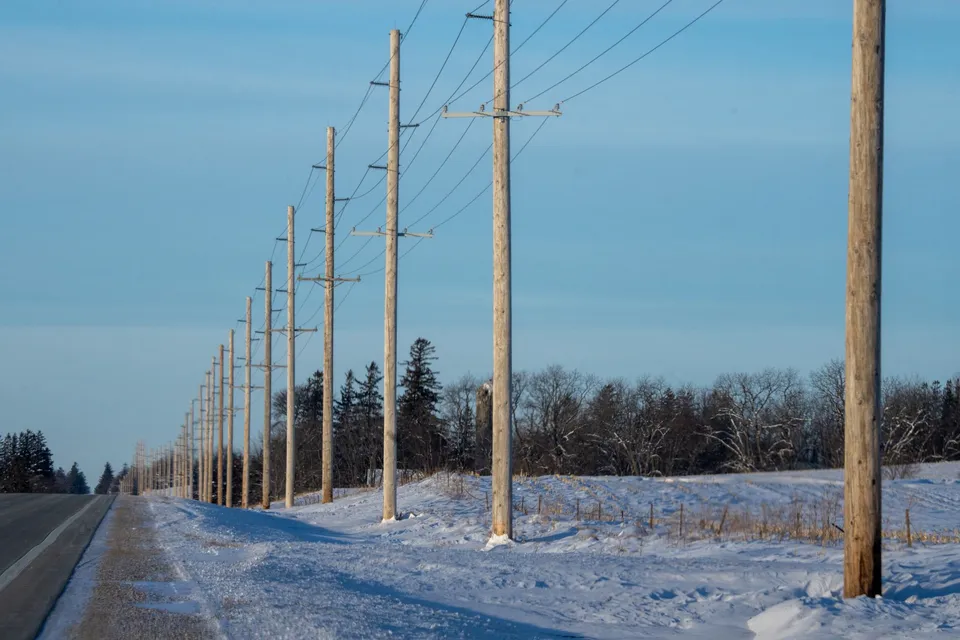
A lot of places talk about jobs as if the workday starts at the plant gate, the clinic entrance, or the school door. In Hibbing, the more useful starting point is the utility bill. The city’s public system ties together electricity, natural gas, water, and steam inside the City of Hibbing proper, which means a new resident is not just choosing a house; they are stepping into a municipally shaped household system that has been in place for generations. Hibbing Public Utilities says it has operated from its present location since 1919 and traces its roots to 1895, when the City Water and Light Department was formed. That history matters because it explains why local life often runs through one institution instead of several separate private providers.
For a worker relocating to Hibbing, that kind of setup changes the way you budget and the way you plan. A household with a tight schedule does not want utility surprises to sit in the background while a new job is getting established. Hibbing’s wastewater page lists a base sewer charge of $18.03, a commodity charge of $6.76 per 1,000 gallons, and a fixed sewage rate of $38.31, so the monthly cost side is visible and not hidden inside vague estimates. That is useful for renters deciding whether an apartment fits a paycheck, and for employers who want to understand the kind of everyday expenses a new hire will be carrying while settling in.
The city also handles ordinary waste in a way that matters to anyone unpacking boxes, cleaning out a garage, or moving into an older home. Hibbing says households receive two recycling bins at no cost, garbage pickup follows alley or curb rules, bulk refuse tags are available for oversized waste, and the Hibbing Green Center operates at the old North Wastewater Treatment Plant. The St. Louis County Hibbing Transfer Station sits at 3994 Landfill Road off Highway 169 west of Hibbing. That is not just a convenience detail; it tells newcomers that moving day, renovation debris, and routine household cleanup all have a real logistics side here.
The same practical logic shows up in broadband. The state’s broadband grant material says a Mediacom fiber project for Hibbing is intended to serve 444 unserved households, 7 unserved businesses, 1 unserved community anchor, 116 underserved households, and 5 underserved businesses, with city, county, and Iron Range Resources and Rehabilitation support. The project is described as a way to expand fiber-to-the-premise service for work-from-home, e-commerce, distance learning, and telehealth, and the grant page says the build is aimed at 2,000 Mbps download and 1,000 Mbps upload speeds. In plain terms, internet access is no longer a background amenity in Hibbing; it is part of the local work infrastructure.
That matters because Hibbing’s workforce is not built around a single employer or a single schedule. The city’s own planning material describes a regional economy tied to mining, healthcare, education, transportation, retail, public services, and maintenance work. The broader point is that jobs here often depend on a chain of systems: a house needs heat, water, sewer, pickup, and broadband before a worker can show up reliably for a shift, a training class, or remote paperwork. A local employer can benefit from that stability too, because hiring is easier when new staff can actually settle their homes and keep their routines intact.
That is one reason Hibbing’s municipal system is worth paying attention to even if you never work in utilities. The city says its public utilities system distributes steam and electricity and furnishes water and natural gas, which means one local institution sits behind several of the most basic parts of household life. When a town organizes core services this tightly, the details of service territory, billing, and maintenance become part of the relocation decision. A newcomer is not only asking whether the rent is manageable; they are also asking whether the property sits inside the city’s service pattern and whether the utility setup fits the budget they have before the first payday.
Hibbing’s life beyond the bill is tied to community institutions that help people stick around long enough to build a career. The city says it is home to the Greyhound Bus Museum, Hibbing Historical Society and Museum, Hull Rust Mine View, Paulucci Space Theatre, and Bob Dylan Collection & Exhibit, and it lists recurring events such as the Hibbing Jubilee, the Spirit of Unity Parade, and the Last Chance Curling Bonspiel. Community Education also reaches from young children to older adults and partners with the Hibbing Public Library, Hibbing Parks and Rec, the Hibbing Chamber, and Chisholm Community Education. That tells a job seeker something important: life here is not only about clocking in. It is also about whether a newcomer can find routines, classes, and community anchors outside work.
If you are comparing offers, the practical question is not simply “What is the wage?” It is “What does this address require of me every month?” In Hibbing, the answer includes utility coverage, sewer charges, recycling, waste disposal, and internet quality, plus the ordinary ability to live well enough to keep a job. That is why a house or apartment near the right service network can matter just as much as the job title itself.
Before you sign a lease or settle on a commute, compare the utility details with the work schedule you are accepting. If you are moving for a job, start with the Hibbing community page and use it as a local orientation point while you sort out the practical side of living here.