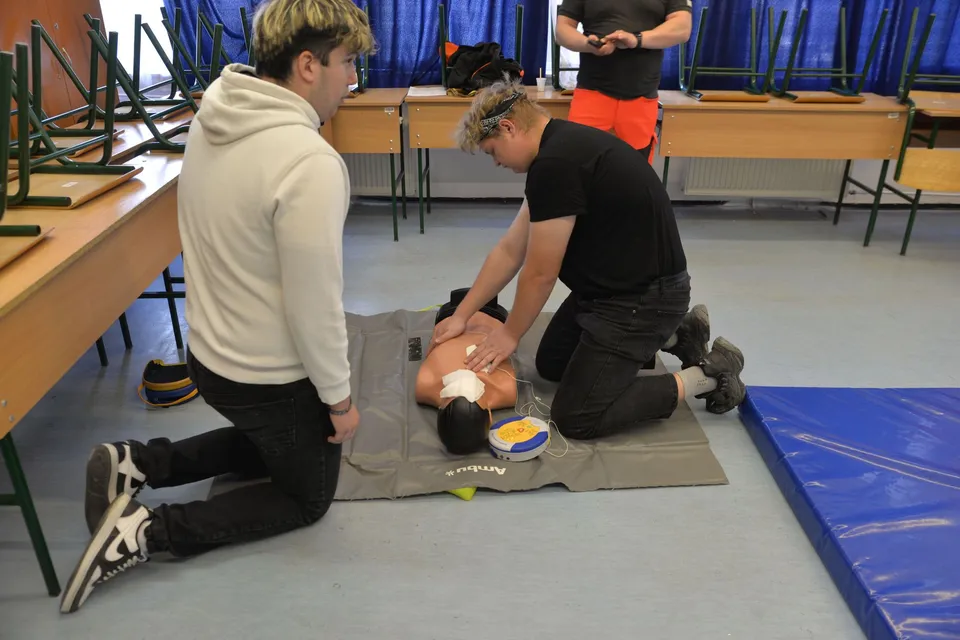
In Hibbing, the smartest job search is often not about hunting for a single perfect opening. It is about finding a credential that matches the work already happening here. Minnesota North College’s Hibbing campus offers pathways in Automotive Technician, Diesel Mechanics & Heavy Equipment, Electrical Maintenance & Construction, IT Networking & Security, Medical Lab Technician, Nursing, and Peace Officer Education, while Chisholm High School folds welding, automotive technology, construction, nursing/EMT, pre-engineering, and CNA certification into a 7-12 program of about 330 students. That is a very different picture from a town where people have to leave to find serious training. In this part of the Iron Range, training and hiring are linked on purpose.
A pipeline that starts before graduation
Hibbing Public Schools organizes its youngest learners through specific buildings: Washington Elementary serves grades K-1, Lincoln Elementary serves grades 2-5, Hibbing High School serves grades 6-12, and the Hibbing Early Learning Center serves birth through age 5. That structure matters because families do not just pick a school; they plan child care, transportation, and work schedules around it. A parent thinking about a new shift or a training program has to know whether the household can handle early drop-off, bus timing, and after-school care. In Hibbing, those decisions are baked into the education system from the start.
The pathway does not stop at graduation. Minnesota North’s Hibbing Upward Bound program serves students from Hibbing, Chisholm, and Nashwauk-Keewatin high schools and offers college preparation, campus visits, paid internships, tutoring, advising, and career exploration. That is a practical bridge for students who need help moving from high school into college or technical training without losing momentum. It also gives employers a useful clue: the local talent pipeline is not generic. It is already shaped by the kinds of jobs the region needs.
Child care support is part of the same story. St. Louis County says it licenses family child care homes and offers child care assistance for families who need help paying for care while working, looking for work, or attending school, including a Hibbing Annex location. For many households, that is the difference between taking a second-shift job, enrolling in a program, or staying stuck in a narrow schedule. In a smaller city, child care is not a side issue; it is part of the labor market infrastructure.
Why employers should pay attention
The biggest lesson in these local programs is not just that they exist. It is that they align with the region’s actual employment mix. Hibbing’s 2023 housing study says education and health services account for 33% of reported jobs in the city, followed by trade, transportation, and utilities at 22%. That helps explain why the strongest training routes point toward health care support, transportation, maintenance, utilities, and technical service work rather than only toward four-year professional tracks. If you are hiring, the question is often whether a role can connect to one of those nearby skill ladders.
A welding student in Chisholm, a diesel mechanic student at Minnesota North, or a CNA trainee moving through local coursework is not just earning a certificate. That person is stepping into a regional economy that needs people who can handle equipment, process work orders, support patients, keep systems running, and show up reliably in settings where a missed shift affects everyone else. The training is useful because it is specific.
Broadband is quietly part of the same pipeline. A Minnesota broadband grant entry for Hibbing says a Mediacom fiber project is intended to serve 444 unserved households, 7 unserved businesses, 116 underserved households, and additional community and business locations, with goals that include distance learning, telehealth, e-commerce, and remote work. The projected service speeds are 2,000 Mbps down and 1,000 Mbps up. For adult learners and hybrid workers, that makes online coursework, remote support work, and home-based study much more realistic.
How to read the local map if you are moving here
If you are deciding whether Hibbing fits your next step, ask three questions:
- Does the job connect to a local credential, apprenticeship, or campus program?
- Can your household handle the school, child care, and transportation schedule that comes with it?
- Will your home internet support training, applications, and any work-from-home tasks you need?
Those questions are useful because Hibbing is not just a workplace; it is a system of schools, child care, training, and digital access. Hibbing Community Education says it serves everyone from the youngest child to the senior adult and works through partners such as the Hibbing Public Library, Hibbing Parks and Rec, the Hibbing Chamber, and Chisholm Community Education. That gives newcomers another way to keep learning, build a routine, and meet people outside the workday.
The strongest move for an applicant here is to think locally and specifically: pick the credential that matches the work, then build the household supports around it. For an employer, the same logic applies in reverse: the more clearly a job aligns with a known local training path, the easier it is to recruit and keep the right person.
If you are job hunting, start with current openings at hibbingjobs.com/jobs/. If you are building a team, connect with Express and look for the training route that best fits the role.