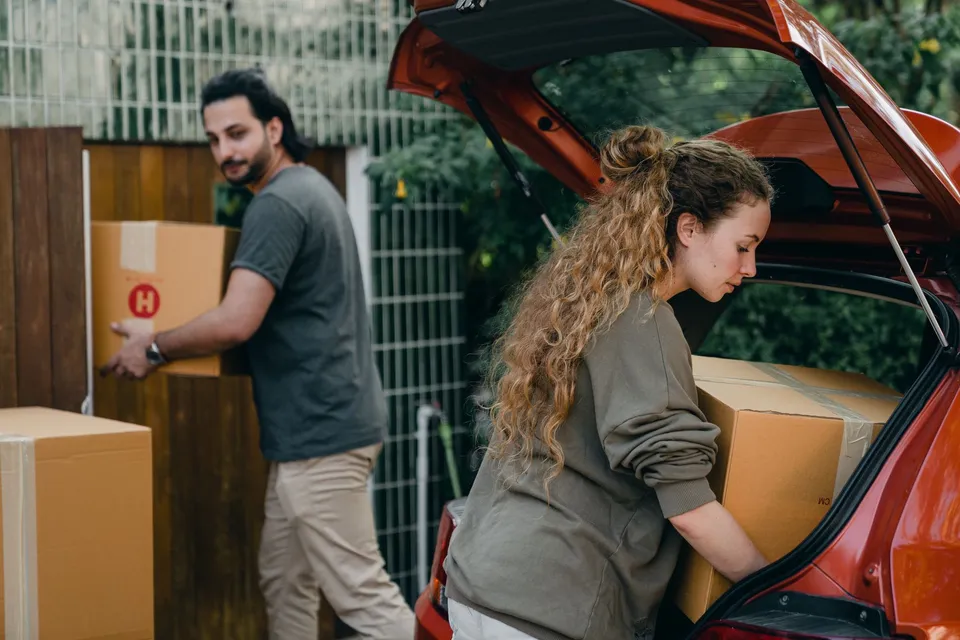
In Hibbing, a move does not really end when the truck is unloaded. The city expects households to know where the cardboard goes, where the bulky furniture goes, and where the leftover renovation debris goes, because disposal is part of the local housing routine rather than an afterthought. Hibbing says it provides two recycling bins per household at no cost, runs garbage pickup with alley-or-curb placement rules, sells bulk refuse tags for oversized waste, and operates both the Hibbing Green Center recycling site and the St. Louis County Hibbing Transfer Station west of town. For a city that covers 182.0 square miles, those stops are far enough apart to matter in a weekend plan.
Why the cleanup map matters before your first workweek settles in
A new job changes how fast a household has to function. When someone is starting a shift schedule, orienting to a new school run, or making a weekend commute across the Range, the hidden task is not just unpacking. It is getting the house ready to behave like a house: boxes flattened, broken items separated, old junk removed, and recycling sorted before it turns into clutter. Hibbing’s system is useful because it gives newcomers more than one place to send materials, which keeps a move from turning into a pileup in the garage or basement. That practical structure matters whether you are arriving from Chisholm, Keewatin, Nashwauk, Buhl, or farther out in the western Mesabi.
The city’s disposal setup also fits the way Hibbing households actually live. Hibbing Public Utilities says it serves electricity, natural gas, water, and steam within the City of Hibbing proper, which means many residents are already dealing with a centralized municipal system for the basics. In that kind of environment, it makes sense that cleanup and utility service feel connected: once the lights, heat, and water are in place, the next step is making the property livable without wasting time guessing where things should go. For workers, that can be the difference between a calm first week and a household that still feels half-moved-in by the time the paychecks start.
What the city actually gives you to work with
The most helpful part of Hibbing’s system is that it separates ordinary household flow from special trips.
- Two recycling bins per household at no cost. That makes basic sorting simpler from day one, especially when the move produces a burst of packaging and paper waste.
- Garbage pickup with alley-or-curb rules. The city’s pickup structure matters because residents do not have to invent a private routine just to get rid of everyday trash.
- Bulk refuse tags for oversized waste. That helps when a move uncovers a couch that has seen better days, a mattress that cannot stay, or other large items that should not sit around for weeks.
- The Hibbing Green Center recycling site. This gives residents a place to think beyond the kitchen bin and handle the steady stream of recyclable material that arrives with a move.
- The St. Louis County Hibbing Transfer Station off Highway 169 west of Hibbing. That matters for bigger cleanouts, property resets, and renovation debris, because it turns a vague cleanup problem into a concrete destination.
Taken together, those pieces do something important: they turn cleanup into a sequence. Instead of one overwhelming project, the household can handle regular trash, recyclable material, and large-item disposal separately. That is a small administrative detail on paper, but in real life it saves time, truck space, and weekend energy.
Why this is more than a homeowner problem
This system is relevant to renters, too. A renter who lands in Hibbing for a new job may not own the building, but still has to handle the moving boxes, worn-out furnishings, and the first round of household waste that comes with settling in. The city’s disposal structure keeps that from becoming an informal favor network or a series of awkward improvisations. That is useful in a region where many households balance work, family schedules, and travel across several communities rather than keeping every errand inside one neighborhood.
It also matters for employers, even if they never advertise it that way. A new hire who can move in faster, clean out a space faster, and understand the city’s basic disposal routes is less likely to spend the first week buried in household friction. That does not show up on a timecard, but it does affect whether someone arrives rested, organized, and ready to learn a job. In a labor market built around schools, clinics, utilities, public works, and other service-heavy work, those small home systems often shape a worker’s reliability more than a resume bullet does. That is an inference, but it is a practical one grounded in how the local systems are set up.
The real value of knowing the cleanup route early
People often think a move is finished when the furniture is in place. In Hibbing, the smarter view is that a move is finished when the packaging is gone, the broken items are gone, and the household knows which local stop handles what. The city’s waste and recycling tools make that possible without forcing residents to treat every bag and box as a separate mystery. That is especially useful in a place where households cover a lot of ground, errands span more than one town, and a weekend can disappear quickly if cleanup has no plan.
If you are relocating for work, start with Hibbing’s Garbage & Recycling page and keep the HPUC page handy before the first truckload arrives. That small bit of homework can make the first week in town feel less like a scramble and more like a reset.