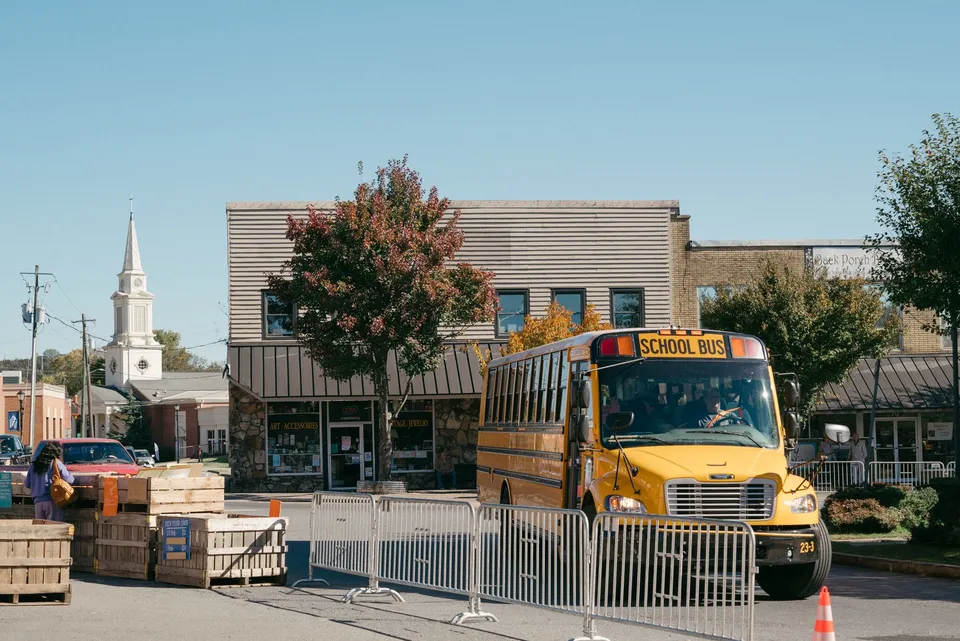
A good Hibbing job offer is rarely just about the paycheck. For a parent, a shift schedule may rise or fall on whether a child can get into the right classroom, whether child care is available at the right hour, and whether training is close enough to be realistic. That is why Hibbing’s education network matters to employment discussions: it is not only where children learn, but also where adults and families build the routines that make work possible. Hibbing Public Schools organizes its pathway around Washington Elementary for grades K-1, Lincoln Elementary for grades 2-5, Hibbing High School for grades 6-12, and the Hibbing Early Learning Center for birth through age 5, with standard enrollment paperwork and district forms for families to sort out the details.
That structure is more important than it sounds. In a city of 16,214 people spread across a large area, a school system is one of the few places that can connect transportation, child care, food service, special programs, counseling, and work schedules all at once. Hibbing’s family support reaches beyond the school day as well: the district’s ECFE classes run during the day and evening, Monday through Thursday, from September through May, and scholarships are available for qualifying families. For households trying to balance a new job, an irregular shift, or a second income, that kind of schedule can mean the difference between making a plan and constantly improvising.
Child care is part of the same system. St. Louis County says it licenses family child care homes and administers child care assistance for families who need help paying for care while working, looking for work, or attending school, and it notes a Hibbing Annex location for child care assistance. That matters because child care is not a side issue in a smaller labor market; it is the gate that determines whether a worker can accept training, keep a steady schedule, or commute farther for a better role. In practical terms, Hibbing’s job market does not begin at the front door of the employer. It begins much earlier, with whether the family logistics can hold together.
Chisholm strengthens that same support network from a different angle. Chisholm Public Schools runs a PK-3 elementary school and a 7-12 campus, which gives western Mesabi families another nearby option for schooling and activities. Its high school curriculum is especially relevant to employers because it includes welding, automotive technology, construction, laser production, computer technology, nursing/EMT, pre-engineering, chemistry/physics, advanced math, and environmental science, along with College in the Schools options such as construction careers, cabinet making, welding, and CNA certification. That is not just a list of electives. It is a direct route into machine shops, construction crews, health care support, and technical college programs without requiring a student to leave the range early.
That connection between school and work keeps going after graduation. Minnesota North College’s Hibbing campus offers a wide set of programs that map closely to local employment: Automotive Technician, Diesel Mechanics & Heavy Equipment, Electrical Maintenance & Construction, Medical Lab Technician, Nursing, IT Networking & Security, Construction Management & Supervision, Culinary Arts/Food Service Management, Peace Officer Education, and other transfer and applied pathways. The campus also offers adult learning options, including a reduced rate for Minnesota residents age 62 or older. For job seekers, the message is clear: Hibbing is not only a place to take a job; it is a place where you can keep stacking credentials while you work.
The campus is also tied into early career exposure before students ever become applicants. Hibbing High School’s college-planning information says Minnesota North College’s Upward Bound program serves students from Hibbing, Chisholm, and Nashwauk-Keewatin high schools and offers college preparation, college visits, paid internships, tutoring, advising, and career exploration, with an optional summer residential component on campus. That is a meaningful local fact because it shows the region already treats college exposure and workplace readiness as a shared responsibility, not a luxury reserved for students who happen to find a path on their own.
The same school-and-training network reaches beyond teenagers. Hibbing Community Education says it serves everyone from the youngest child to the senior adult and keeps class offerings in the Hibbing Community PIE, the Hibbing Daily Tribune, and through partners such as the Hibbing Public Library, Hibbing Parks and Rec, the Hibbing Chamber, and Chisholm Community Education. That makes the education system a community on-ramp, not just a student service. New residents can use it to meet people, learn the town’s rhythm, and build a schedule that fits around work instead of fighting it.
For job seekers, the practical takeaway is simple: in Hibbing, the best career move may be to think about school access, child care, and training at the same time you think about wages. A job that looks strong on paper can become difficult if the family schedule collapses. A modest role can become sustainable if the local support system is close, flexible, and familiar. Hibbing and Chisholm do not remove those tradeoffs, but they do give workers more ways to solve them. If you are comparing openings, start with the jobs page on hibbingjobs.com and then judge each opportunity by how well it fits the rest of your life, not just the clock.